Photometric real-time dust monitors at Mammoth Underground Mine
Exposure to airborne dust in underground coal mines remains one of the most critical occupational health hazards in the mining industry.
Historically, underground mines have used gravimetric sampling for occupational dust monitoring. Gravimetric devices collect particulate matter on filters, which are subsequently weighed in a laboratory to determine time-weighted average (TWA) concentrations. These results are only available after laboratory analysis, days after exposure has occurred. This removes the real-time identification of an approaching unacceptable exposure level, as well as the application of dust controls, or substitution of workers to lower dust exposure areas and/or tasks.
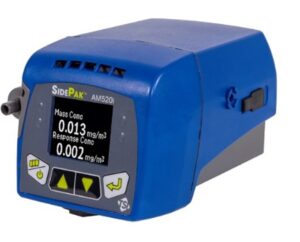
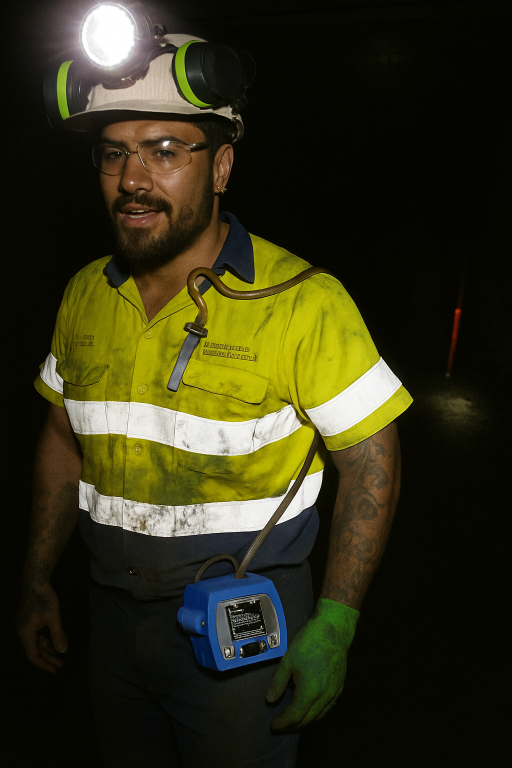
In response to these limitations, photometric real-time dust monitors have been implemented at Mammoth Underground Mine to provide immediate, continuous measurements of respirable dust concentrations. Additionally, a method of estimating respirable crystalline silica utilising real-time dust monitors has also been implemented. Now workers are enabled to, in real-time, identify control effectiveness and exposure levels, and react at the worksite level to ensure effective controls are implemented.
Figure 1 - Example of Real-time Respirable Dust Monitor
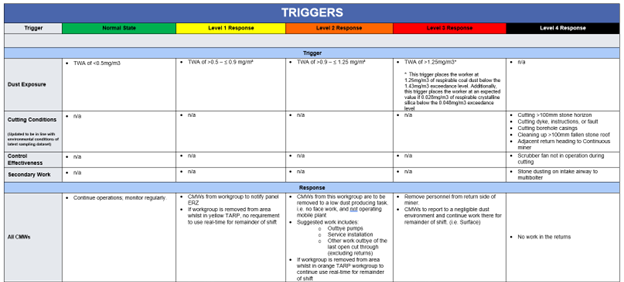
In addition to real-time monitors, use of a TARP allows for work to be planned in potentially higher risk dust areas, by actively knowing when there are high dust levels and determining effectiveness of controls to make dust levels acceptable. As a result, workers take an active role in identifying and controlling their dust risk.